Thermodynamics Chat Support Connect to Thermodynamics
Message to Thermodynamics

Request a Quote

Dubai
+971 ▾
  • Afghanistan +93
  • Åland Islands +358
  • Albania +355
  • Algeria +213
  • American Samoa +1
  • Andorra +376
  • Angola +244
  • Anguilla +1
  • Antigua and Barbuda +1
  • Argentina +54
  • Armenia +374
  • Aruba +297
  • Australia +61
  • Austria +43
  • Azerbaijan +994
  • Bahamas +1
  • Bahrain +973
  • Bangladesh +880
  • Barbados +1
  • Belarus +375
  • Belgium +32
  • Belize +501
  • Benin +229
  • Bermuda +1
  • Bhutan +975
  • Bolivia +591
  • Bosnia and Herzegovina +387
  • Botswana +267
  • Brazil +55
  • British Indian Ocean Territory +246
  • British Virgin Islands +1
  • Brunei +673
  • Bulgaria +359
  • Burkina Faso +226
  • Burundi +257
  • Cambodia +855
  • Cameroon +237
  • Canada +1
  • Cape Verde +238
  • Caribbean Netherlands +599
  • Cayman Islands +1
  • Central African Republic +236
  • Chad +235
  • Chile +56
  • China +86
  • Christmas Island +61
  • Cocos (Keeling) Islands +61
  • Colombia +57
  • Comoros +269
  • Congo +243
  • Congo +242
  • Cook Islands +682
  • Costa Rica +506
  • Côte d’Ivoire +225
  • Croatia +385
  • Cuba +53
  • Cyprus +357
  • Czech Republic +420
  • Denmark +45
  • Djibouti +253
  • Dominica +1
  • Dominican Republic +1
  • Ecuador +593
  • Egypt +20
  • El Salvador +503
  • Equatorial Guinea +240
  • Eritrea +291
  • Estonia +372
  • Ethiopia +251
  • Falkland Islands +500
  • Faroe Islands +298
  • Fiji +679
  • France +33
  • French Guiana +594
  • French Polynesia +689
  • Gabon +241
  • Gambia +220
  • Georgia +995
  • Germany +49
  • Ghana +233
  • Gibraltar +350
  • Greece +30
  • Greenland +299
  • Grenada +1
  • Guam +1
  • Guatemala +502
  • Guernsey +44
  • Guinea +224
  • Guinea-Bissau +245
  • Guyana +592
  • Haiti +509
  • Honduras +504
  • Hong Kong +852
  • Hungary +36
  • Iceland +354
  • India +91
  • Indonesia +62
  • Iran +98
  • Iraq +964
  • Ireland +353
  • Isle of Man +44
  • Israel +972
  • Jamaica +1
  • Japan +81
  • Jersey +44
  • Jordan +962
  • Kazakhstan +7
  • Kenya +254
  • Kiribati +686
  • Kosovo +383
  • Kuwait +965
  • Kyrgyzstan +996
  • Laos +856
  • Latvia +371
  • Lebanon +961
  • Lesotho +266
  • Liberia +231
  • Libya +218
  • Liechtenstein +423
  • Lithuania +370
  • Luxembourg +352
  • Macau +853
  • Macedonia (FYROM) +389
  • Madagascar +261
  • Malawi +265
  • Malaysia +60
  • Maldives +960
  • Mali +223
  • Malta +356
  • Marshall Islands +692
  • Martinique +596
  • Mauritania +222
  • Mauritius +230
  • Mayotte +262
  • Mexico +52
  • Micronesia +691
  • Moldova +373
  • Monaco +377
  • Mongolia +976
  • Montenegro +382
  • Montserrat +1
  • Mozambique +258
  • Myanmar (Burma) +95
  • Namibia +264
  • Nauru +674
  • Nepal +977
  • Netherlands +31
  • New Caledonia +687
  • New Zealand +64
  • Nicaragua +505
  • Niger +227
  • Nigeria +234
  • Niue +683
  • Norfolk Island +672
  • North Korea +850
  • Northern Mariana Islands +1
  • Oman +968
  • Pakistan +92
  • Palau +680
  • Palestine +970
  • Panama +507
  • Papua New Guinea +675
  • Paraguay +595
  • Peru +51
  • Philippines +63
  • Poland +48
  • Portugal +351
  • Puerto Rico +1
  • Qatar +974
  • Romania +40
  • Rwanda +250
  • Saint Barthélemy +590
  • Saint Helena +290
  • Saint Kitts and Nevis +1
  • Saint Lucia +1
  • Saint Martin +590
  • Saint Pierre and Miquelon +508
  • Saint Vincent and the Grenadines +1
  • Samoa +685
  • San Marino +378
  • São Tomé and Príncipe +239
  • Saudi Arabia +966
  • Senegal +221
  • Serbia +381
  • Seychelles +248
  • Sierra Leone +232
  • Singapore +65
  • Sint Maarten +1
  • Slovakia +421
  • Slovenia +386
  • Solomon Islands +677
  • Somalia +252
  • South Africa +27
  • South Korea +82
  • South Sudan +211
  • Spain +34
  • Sri Lanka +94
  • Sudan +249
  • Suriname +597
  • Svalbard and Jan Mayen +47
  • Swaziland +268
  • Sweden +46
  • Switzerland +41
  • Syria +963
  • Taiwan +886
  • Tajikistan +992
  • Tanzania +255
  • Thailand +66
  • Timor-Leste +670
  • Togo +228
  • Tokelau +690
  • Tonga +676
  • Trinidad and Tobago +1
  • Tunisia +216
  • Turkey +90
  • Turkmenistan +993
  • Turks and Caicos Islands +1
  • Tuvalu +688
  • U.S. Virgin Islands +1
  • Uganda +256
  • Ukraine +380
  • United Arab Emirates +971
  • United Kingdom +44
  • United States +1
  • Uruguay +598
  • Uzbekistan +998
  • Vanuatu +678
  • Vatican City +39
  • Venezuela +58
  • Vietnam +84
  • Wallis and Futuna +681
  • Western Sahara +212
  • Yemen +967
  • Zambia +260
  • Zimbabwe +263
Call for our Solutions
Email Us
Explore our solutions
Select Product
Fisheries & Seafood Refrigeration Solutions

Fisheries & Seafood Refrigeration Solutions

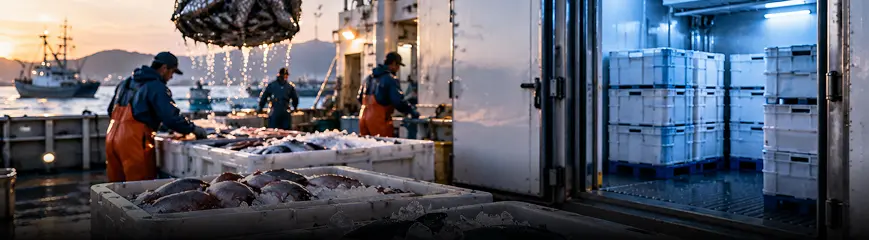
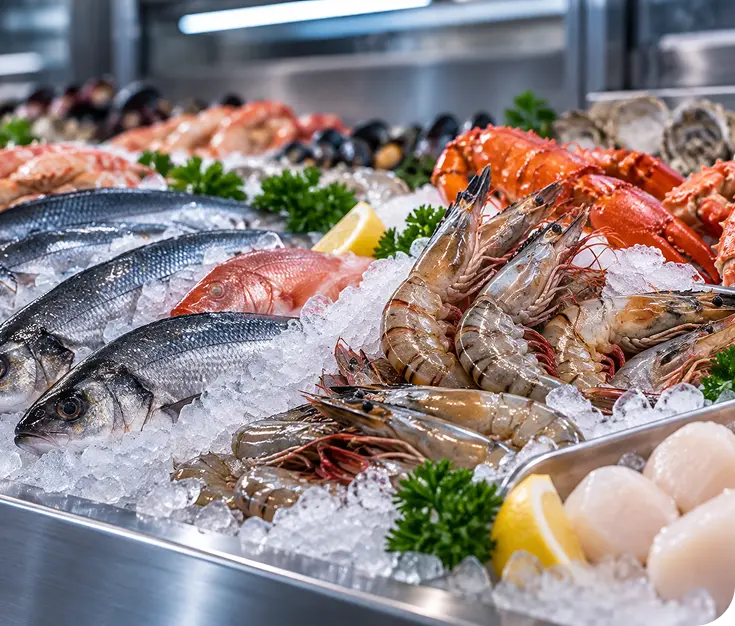
Marine-grade cooling systems for fish processing, live seafood holding, IQF freezing and cold-chain management, engineered for freshness, compliance and energy efficiency across Middle Eastern coastal facilities.

–
°C
Sea Temperatures
–
°C
Fresh Fish Chilling
-
to -
°C
IQF Freezing
-
to -
°C
Frozen Storage

Why Seafood Refrigeration
Is Different

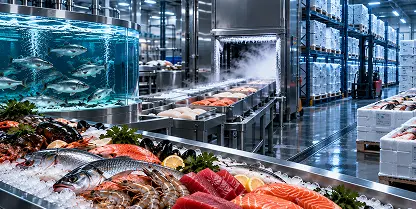
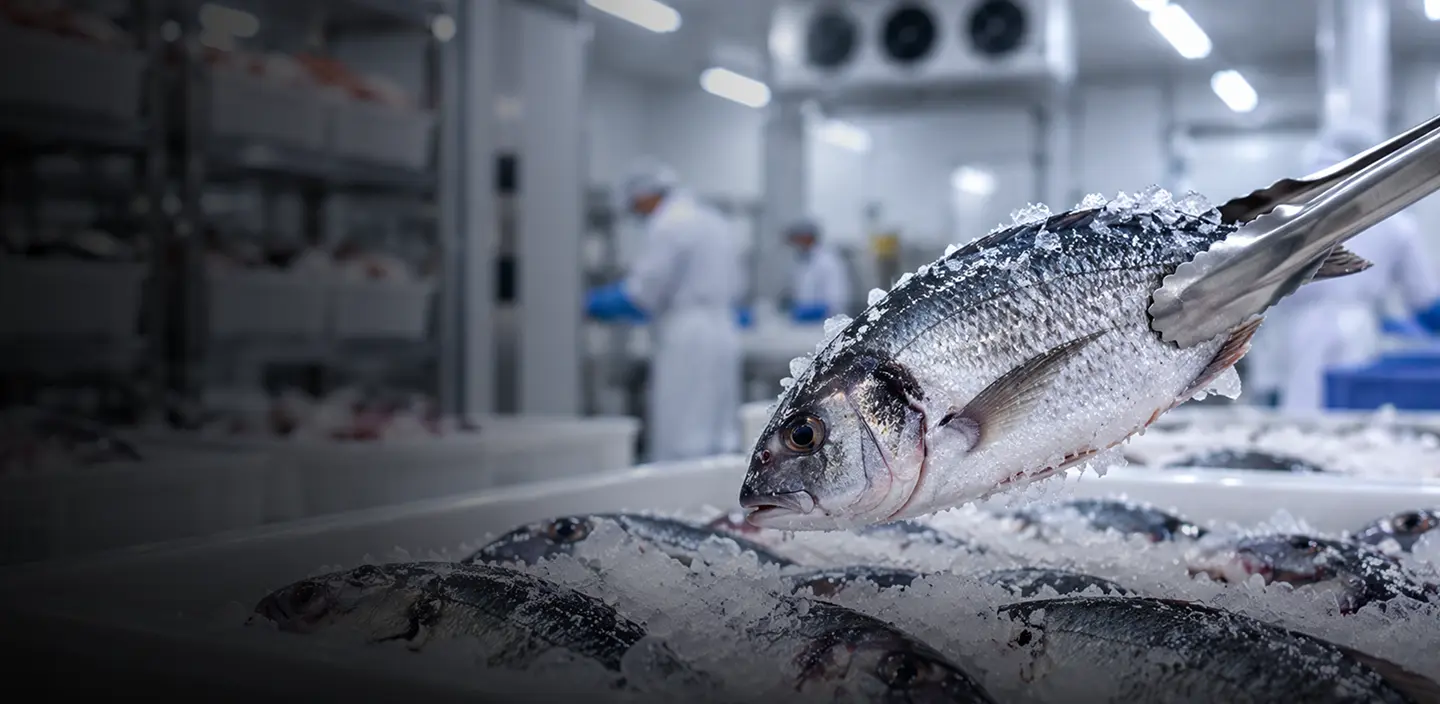
Seafood requires precise temperature control from catch and receiving through processing, freezing, storage and distribution, with product quality highly sensitive to time and temperature.

06
Critical Challenges
01

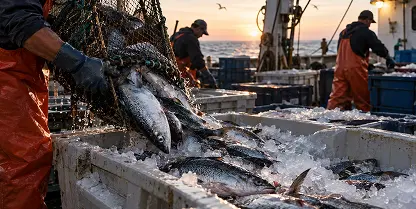
Ultra-Rapid Deterioration

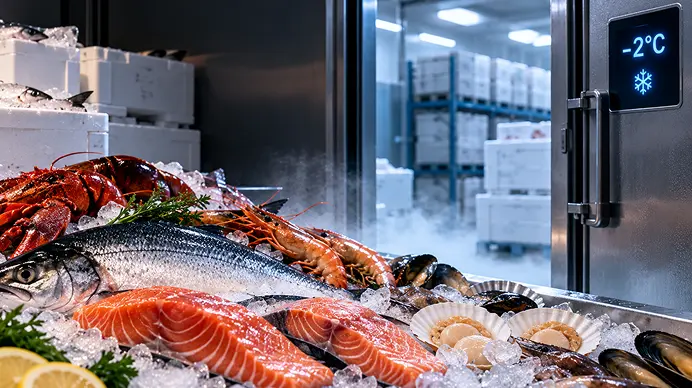
Seafood quality begins to decline immediately after catch, requiring cooling to start within a very short window to preserve texture and value.

Sea temperatures 28°C → −32°C
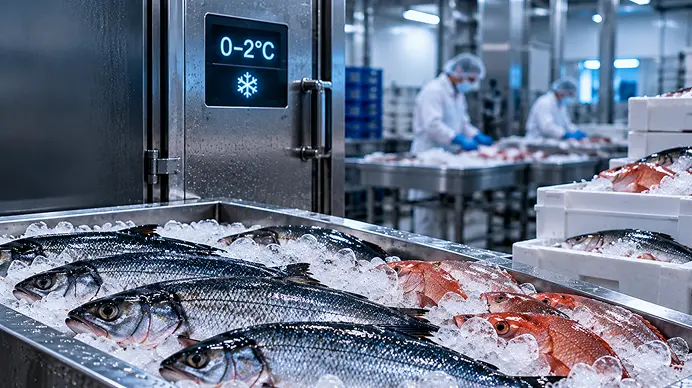
Fresh fish chilling target: 0 → −2°C
Frozen dairy refrigeration
02

Multiple Temperature Zones

A single facility may need to manage live holding, chilling, super-chilling, IQF freezing, glazing and frozen storage simultaneously.

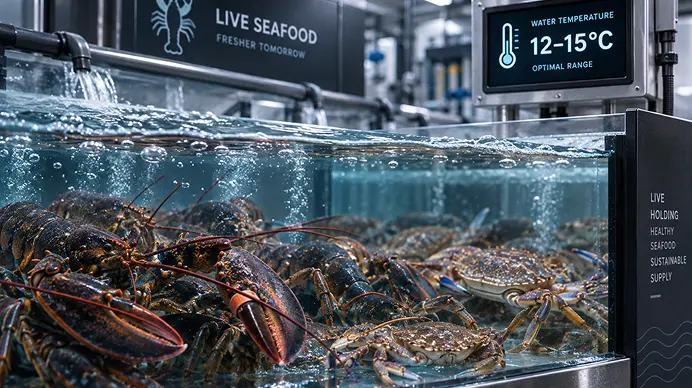
Live Holding:   12–15°C
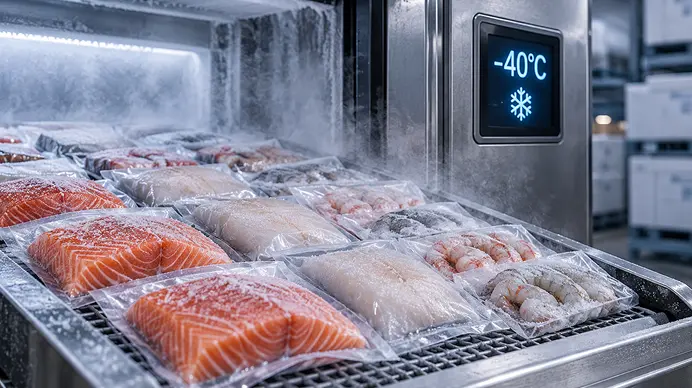
IQF Freezing:   -30°C to -40°C
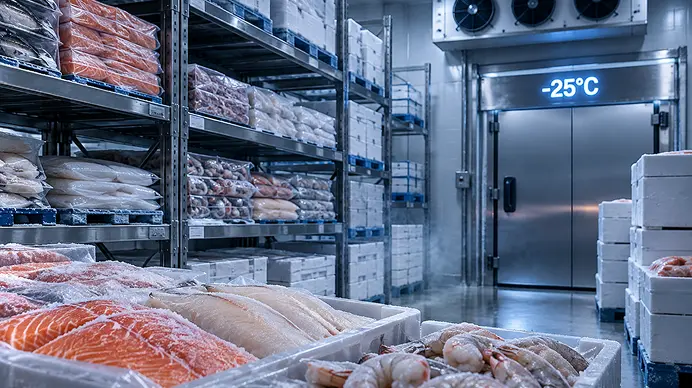
Frozen Storage:   -20°C to -25°C
Multiple Temperature Zones
03

Saltwater Corrosion

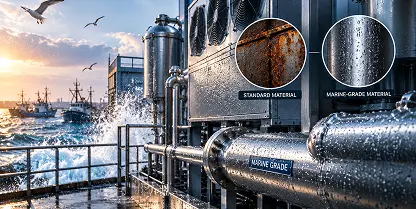
Coastal and marine environments accelerate corrosion of refrigeration equipment, requiring corrosion-resistant materials and construction.

Technical Indicator:
Marine-grade, corrosion-resistant equipment required
Saltwater Corrosion
04

International Compliance

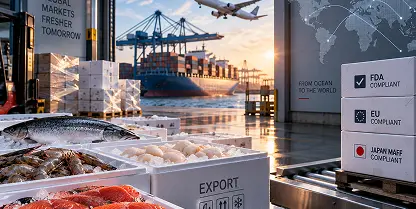
Seafood exported internationally must meet destination-market requirements such as FDA, EU, GCC/GSO and Japan MAFF standards.

FDA Seafood HACCP
EU Food Hygiene Requirements
Japan MAFF Requirements
International Compliance
05

High-Value Product Preservation

Premium seafood species carry high per-kilogram value, making temperature control critical to protecting product quality and yield.

Technical Indicator:
Applies to super-chilled and cryogenically frozen premium seafood
High-Value Product Preservation
06

Water Usage & Environmental Pressure

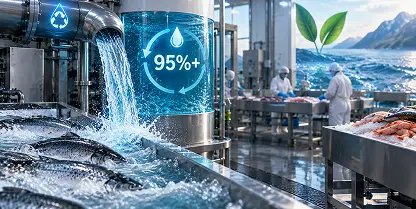
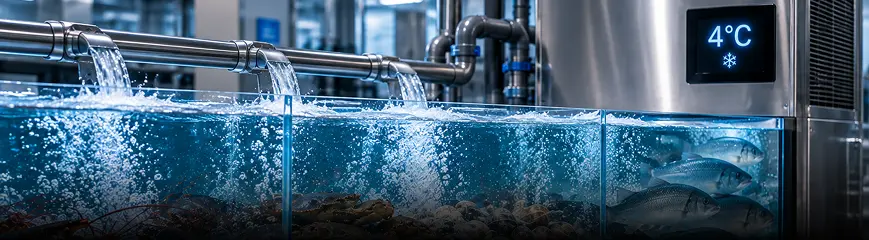
Seafood cooling methods such as RSW and ice systems involve significant water use, requiring efficient, environmentally responsible system design.

Technical Indicator:
RSW systems: 95%+ water recirculation achievable
Water Usage & Environmental Pressure

Seafood quality begins to decline immediately after catch, requiring cooling to start within a very short window to preserve texture and value.

Sea temperatures
28–32°C
Fresh fish chilling target
0–2°C
Ultra-Rapid Deterioration

A single facility may need to manage live holding, chilling, super-chilling, IQF freezing, glazing and frozen storage simultaneously.

Live Holding: 12–15°C
IQF Freezing: −30°C to −40°C
Frozen Storage: −20°C to −25°C
Multiple Temperature Zones

Coastal and marine environments accelerate corrosion of refrigeration equipment, requiring corrosion-resistant materials and construction.

Marine-grade, corrosion-resistant equipment required
Saltwater Corrosion

Seafood exported internationally must meet destination-market requirements such as FDA, EU, GCC/GSO and Japan MAFF standards.

FDA Seafood HACCP
EU Food Hygiene Requirements
Japan MAFF Requirements
International Compliance

Premium seafood species carry high per-kilogram value, making temperature control critical to protecting product quality and yield.

Applies to super-chilled and cryogenically frozen premium seafood
High-Value Product Preservation

Seafood cooling methods such as RSW and ice systems involve significant water use, requiring efficient, environmentally responsible system design.

RSW systems: 95%+ water recirculation achievable
Water Usage & Environmental Pressure

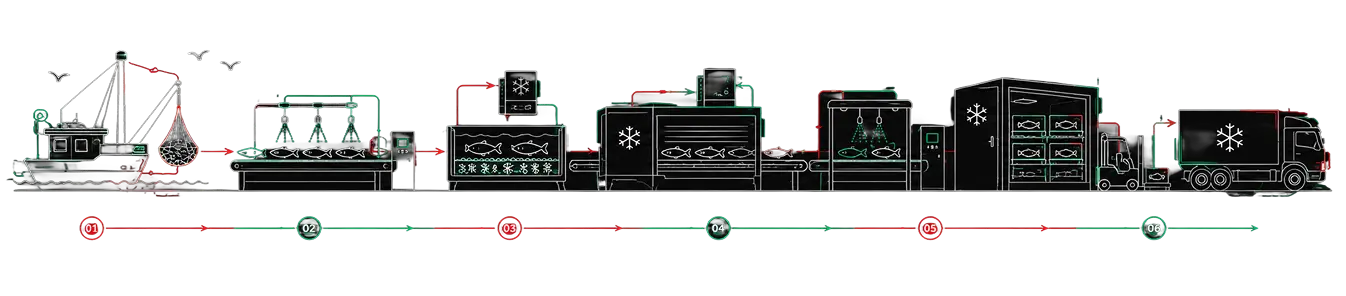
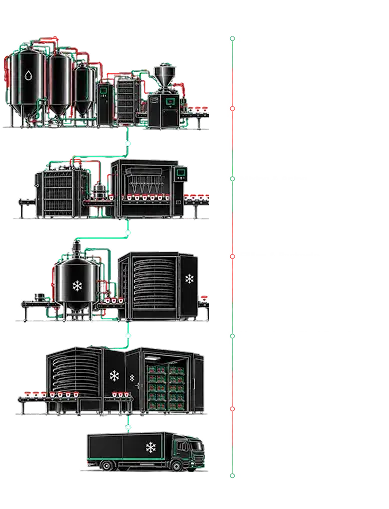
One Cold Chain, Multiple Critical Temperatures.

Seafood facilities operate across multiple temperature zones, from live holding and fresh-fish chilling to super-chilling, IQF freezing, glazing and frozen storage.

Ice cream processing equipment

One Cold Chain, Multiple
Critical Temperatures.

Six stages, each with its own thermal target. A failure at any single point compromises everything downstream.

12–15°C

Live crustaceans held at ambient holding temperature prior to processing or sale.

Live Holding
Category Crustaceans
0–2°C

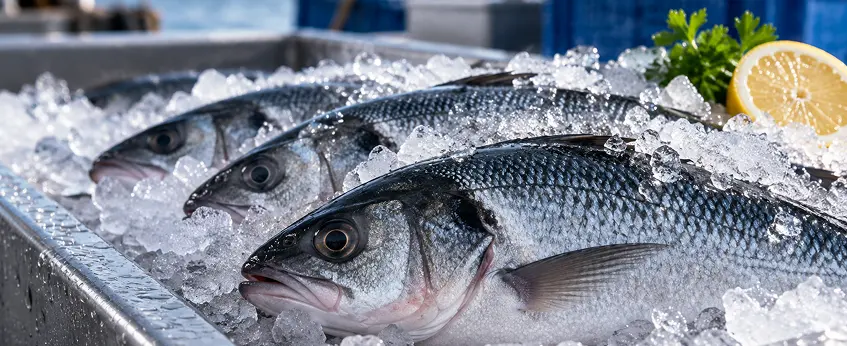
Fresh fish chilled immediately after catch or receiving to slow spoilage.

Chilling
Category Fresh fish
-1°C to -2°C

Premium seafood held just above its freezing point for extended fresh-quality shelf life.

Super-Chilling
Category Premium seafood
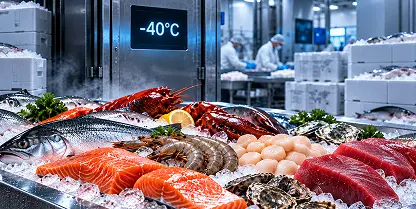
-30°C to -40°C

Individual seafood portions rapidly frozen to preserve texture and minimize ice-crystal formation.

IQF Freezing
Category Individual portions
-18°C

A protective water or ice coating applied to frozen product surfaces.

Glazing
Category Water/ice coating
-20°C to -25°C

Premium frozen seafood products held in long-term frozen storage.

Frozen Storage
Category Premium frozen products

Engineered Around Your Seafood Processing Load

Cooling requirements vary significantly by seafood type, starting temperature, target core temperature and required pull-down time.

Cooling Load

0 – 0 kW / 1,000 kg

Get Facility Load Assessment

Temperature Control
Protects More Than the Product

For seafood, every temperature excursion can affect texture, appearance, shelf life and product value.

<50 μm Ice Crystal Size
Freezing Rate & Structure
Rapid Freezing
→
Small Ice Crystals
→
Preserved Texture
Rapid Freezing Minimizes ice-crystal growth
Slow Freezing Larger ice crystals, greater cellular damage

Heat Shock Impact on Crystal Growth

Typical GCC distribution chains can expose seafood to multiple heat-shock events between production and point of sale.

Distribution Chain
Production
→
Distribution
→
Point of Sale

Why It Matters

Repeated warming and cooling cycles during distribution can affect seafood texture, appearance and shelf life.

Shelf Life vs. Storage Temperature

Storage temperature is the single largest determinant of usable shelf life.

0–2°C
10–14 days
-1 to -2°C
21–28 days
-18 to -20°C
12–18 months
-20 to -25°C
12–18 months
Storage Reference
Fresh whole fish 0–2°C 10–14 days
Super-chilled fish -1 to -2°C 21–28 days
IQF shrimp -18 to -20°C 12–18 months
Glazed products -20 to -25°C 12–18 months
Lower storage temperatures provide longer usable shelf life.

Storage Temperature Matters

Temperature fluctuations above the ideal storage condition accelerate quality deterioration and shorten usable shelf life.

Complete Refrigeration Solutions for Fisheries & Seafoo

From vessel-side cooling to processing, freezing, live holding and cold storage, each system is engineered as part of one continuous seafood cold chain.

On-Board Refrigeration

ON-BOARD REFRIGERATION

Best For Commercial fishing
vessels
  • Marine-grade construction for vessel environments
  • Immediate post-catch cooling
  • Supports protection against ultra-rapid deterioration

Specifications

Refrigeration equipment engineered for the vessel environment, providing immediate cooling from the point of catch.

Complete Refrigeration Solutions for
Fisheries & Seafood

From vessel-side cooling to processing, freezing, live holding and cold storage, each system is engineered as part of one continuous seafood cold chain.

On-Board Refrigeration
Best For Commercial fishing
vessels
Capacity 10–50
Tonnes/day
Temperature -25°C to -40°C
  • Marine-grade construction for vessel environments
  • Immediate post-catch cooling
  • Supports protection against ultra-rapid deterioration

Specifications

Refrigeration equipment engineered for the vessel environment, providing immediate cooling from the point of catch.

Best For 50–150 kW typical draw
Investment Range Scales with vessel hold capacity
Quality Outcome Immediate catch preservation and maximum freshness
View System
Super-Chilling Systems
Best For Premium fish,
sashimi/sushi applications
Capacity 1–10
Tonnes/day
Temperature -1°C to -2°C
  • Holds product just above its freezing point
  • Extends fresh-quality shelf life
  • Suited to premium and sashimi/sushi-grade product

Specifications

Super-chilling systems hold seafood at -1°C to -2°C, extending fresh-quality shelf life while preserving product structure.

Best For 30–80 kWh typical draw
Investment Range Scales with processing capacity
Quality Outcome Extended shelf life and preserved product structure
View System
RSW / Ice Slurry Systems
Best For High-volume
pelagic fish processing
Capacity 20–100
Tonnes/day
Temperature -0.5°C to -2°C
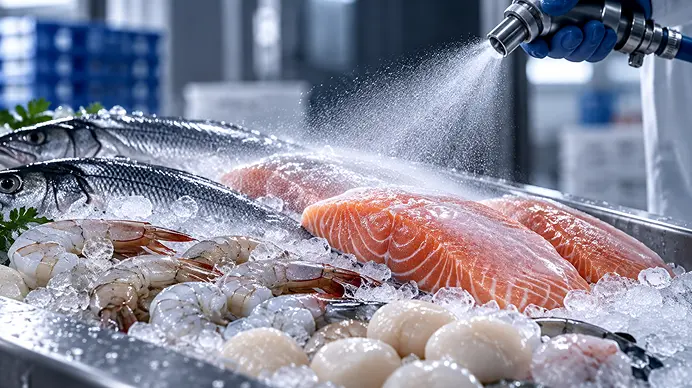
  • Rapid, uniform cooling for high-volume catches
  • Recirculating water reduces consumptive use
  • Suited to pelagic fish processing

Specifications

Refrigerated seawater and ice slurry systems provide rapid, high-volume cooling with recirculating water use.

Best For 70–200 kWh typical draw
Investment Range Scales with tank and flow volume
Quality Outcome Rapid uniform cooling and 95%+ water recirculation efficiency
View System
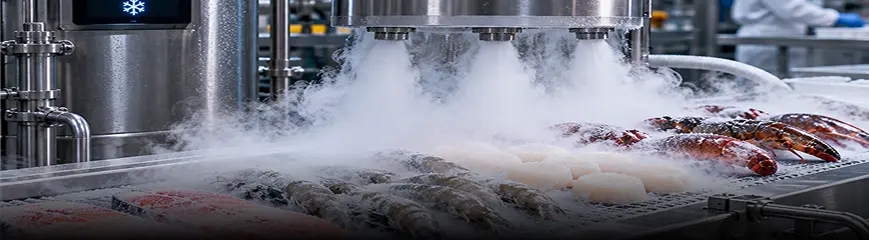
IQF Freezing Tunnels
Best For Shrimp, fillets,
value-added portions
Capacity 2–20
Tonnes/day
Temperature -30°C to -40°C
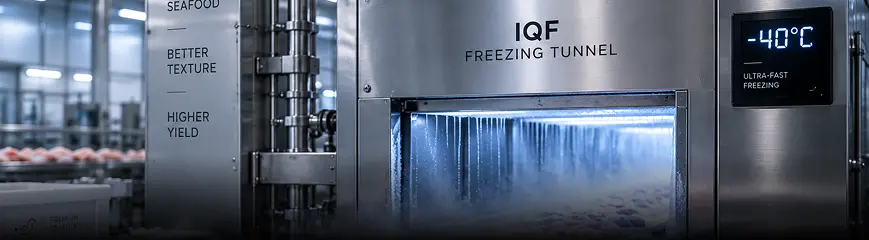
  • Individually quick-freezes each portion
  • Minimizes ice-crystal growth
  • Suited to shrimp, fillets and value-added portions

Specifications

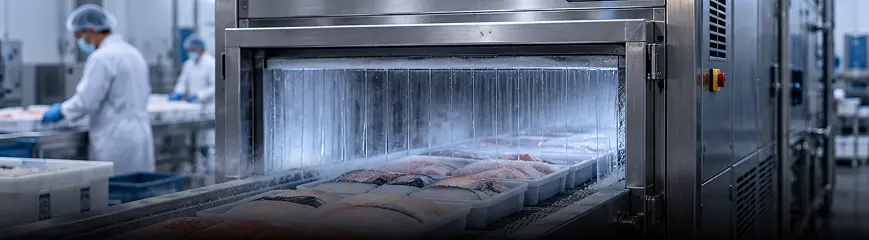
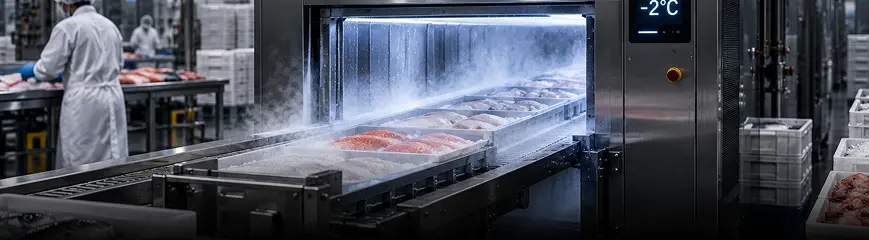
IQF tunnels rapidly freeze individual seafood portions at -30°C to -40°C to preserve texture and structure.

Best For 100–250 kWh typical draw
Investment Range Scales with hourly belt output
Quality Outcome Preserved texture and minimal ice-crystal growth
View System
Live Seafood Holding
Best For Lobster, crab,
mollusks, live fish
Capacity 500–5,000
Liters/tank
Temperature 12°C to 15°C
  • Maintains appropriate holding temperature
  • Suited to lobster, crab, mollusks and live fish
  • Supports product held prior to processing or sale

Specifications

Live holding systems maintain crustaceans and live seafood at an appropriate holding temperature.

Best For 15–45 kWh typical draw
Investment Range Scales with tank volume and filtration setup
Quality Outcome Maintained vitality prior to processing or sale
View System
Cryogenic Freezing
Best For Premium seafood,
delicate high-value portions
Capacity 1–10
Tonnes/day
Temperature -80°C to -150°C
  • Very rapid freezing for delicate products
  • Suited to premium, high-value seafood portions
  • Supports high-value product preservation

Specifications

Cryogenic freezing systems are used for premium seafood and delicate high-value portions requiring very rapid freezing.

Best For Liquid nitrogen/CO2 consumption model
Investment Range Scales with cryogen consumption and throughput
Quality Outcome Ultra-fast freezing for delicate, high-value portions
View System

The Right Temperature for Every Frozen Dairy Product

Fresh Whole Fish

Fresh Whole Fish

Whole fish chilled immediately to preserve freshness, texture, quality, and shelf life.

View Solutions
Storage 0–2°C
Critical Control Immediate chilling post-catch
Shelf Life 10–14 days

What matters most for your facility?

Recommended system Continuous Ice Cream Freezers

Built for Quality, Compliance & Traceability

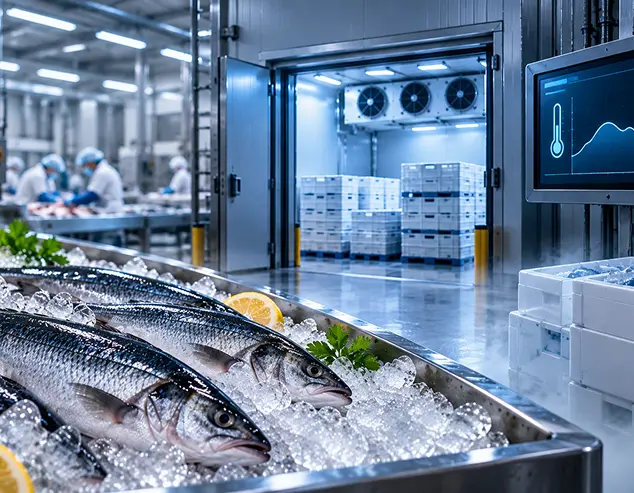
Temperature monitoring and control systems for seafood processing and cold-chain requirements.

FDA Seafood HACCP
EU Food Hygiene Requirements
GCC / GSO Standards
MSC / ASC
Japan MAFF Requirements

Temperature Monitoring Dashboard / Sensor Map

12–15°C Live Holding
0–2°C Chilling
-1 to -2°C Super-Chilling
-30 to -40°C IQF Freezing
-18°C Glazing
-20 to -25°C Frozen Storage

Traceability & Documentation

Batch Records
Temperature Records
Calibration Certificates
Validation Studies
Corrective Actions
Traceability Records

Lower Refrigeration Energy Without Compromising Seafood Quality

Refrigeration energy efficiency
Recirculating cooling reduces consumptive water use.
Water-Efficient
Match refrigeration output to changing seafood loads.
Load-Matched
Recover available refrigeration/plant heat where applicable.
Where Applicable
Corrosion-resistant materials for coastal environments.
Corrosion-Resistant
Coordinate multiple temperature zones to reduce temperature cross-talk.
Coordinated
RSW systems can achieve 95%+ water recirculation.
95%+ Recirculation
0
Water recirculation achievable with
RSW (refrigerated seawater) systems.

Refrigeration Performance You Can Measure

Client Profile

Fish processing and cold-chain facility in Jeddah handling fresh seafood for frozen storage and distribution.

Challenge

Fresh fish required rapid freezing immediately after processing, with a target product core temperature of approximately -18°C while minimizing dehydration, drip loss and texture deterioration

Solution Implemented

Dedicated low-temperature blast freezer operating at approximately -35°C to -40°C, supported by a high-capacity evaporator, optimized airflow distribution, digital controls, temperature monitoring, heavy-duty insulation and automatic defrost.

Read More
-18°C or below
Target Product Core
-35°C to 40°C
Blast Freezer Room
High Velocity
Air Circulation

Client Profile

A leading supermarket retailer in the UAE requiring a dedicated fish distribution center to support centralized receiving, handling, storage and distribution of fresh and frozen seafood across its retail network.

Challenge

Maintain uninterrupted cold-chain conditions while handling different seafood categories, frequent product movement, variable refrigeration loads and multiple temperature-controlled environments.

Solution Implemented

Centralized refrigeration infrastructure with dedicated chilled and frozen zones, high-efficiency evaporators, food-grade insulated construction, cold-room doors, digital controls and continuous monitoring.

Read More
Chilled + Frozen
Temperature Zones
Continuous
Temperature Monitoring
Centralized
Distribution

Application

Fisheries Processing & Cold Storage

Solution Implemented

Blast freezers, frozen/chilled storage, high-capacity evaporators and integrated refrigeration infrastructure.

Read More
Rapid Freezing
Consistent Storage
Integrated Cold Chain
High-Throughput Operation

What Does Better Seafood Refrigeration Return to Your Business??

$0M 5-Year Total Benefit
0% 5-Year ROI
0 Years Payback Period
0% IRR
Better Seafood Refrigeration Return
Benefit Categories
Yield Improvement
Quality Premium
Energy Savings
Water Savings
Reduced Losses
Rapid Freezing
Recommended: IQF Tunnels / Blast Freezing
Product Quality
Recommended: Super-Chilling / Cryogenic Freezing
Energy & Water Efficiency
Recommended: RSW / Ice Slurry Systems
Long-Term Reliability
Recommended: Marine-Grade Refrigeration

Daily Refrigeration Questions, Answered

Fresh whole fish should be stored at 0–2°C.

RSW (refrigerated seawater) and ice slurry systems are used for high-volume pelagic fish processing and can achieve 95%+ water recirculation, reducing consumptive water use.

Investment for an IQF system depends on capacity, product type and freezing method — a facility-specific assessment is the best way to determine an accurate figure for your operation.

Refrigeration and monitoring systems are designed to support FDA Seafood HACCP requirements, alongside EU food hygiene, GCC/GSO, MSC/ASC and Japan MAFF requirements where applicable.

Super-chilling holds premium seafood at -1°C to -2°C, just above its freezing point, extending shelf life to 21–28 days while preserving fresh-product quality.

Refrigeration and monitoring systems can be designed to support Japan MAFF requirements as part of the facility's compliance and traceability documentation; specific requirements should be confirmed for your target product and market.

Marine-grade, corrosion-resistant equipment is used to protect refrigeration systems operating in coastal and marine environments.

Middle Eastern coastal facilities must cool seafood rapidly from sea temperatures of 28–32°C while managing multiple temperature zones, saltwater corrosion, international compliance and high-value product preservation.

Rapid freezing methods such as IQF help minimize ice-crystal growth and preserve cellular structure, protecting texture and product quality compared to slower freezing.

Yield improvement is one of the benefit categories contributing to the reported 215% 5-year ROI; the specific yield improvement for your facility depends on your current process and would be assessed individually.

Live seafood holding systems are engineered to maintain appropriate holding temperatures (12–15°C for crustaceans) as part of overall system design; water quality management should be assessed as part of a facility-specific system design.

Specific mortality rate figures are not included in this overview — they depend on species, system design and handling practices, and would be assessed as part of a facility-specific engineering review.

Premium ice cream products in cold storage

Optimize Your Seafood Cooling

Tell us about your seafood processing, storage or distribution requirements. We'll help identify the right cooling strategy for product quality, cold-chain performance and operational efficiency.

Request a Quote

Tell us more about yourself and what you have got in mind.

Eco-Smart, Turnkey Cooling Solutions
for Tomorrow

We provide advanced commercial cooling solutions that reduce emissions and drive energy-efficient, sustainable performance.

Request a Quote

Tell us more about yourself and what
you have got in mind.